Why You Feel Anxious for No Reason (And What’s Actually Going On) | Therapist in Orange County
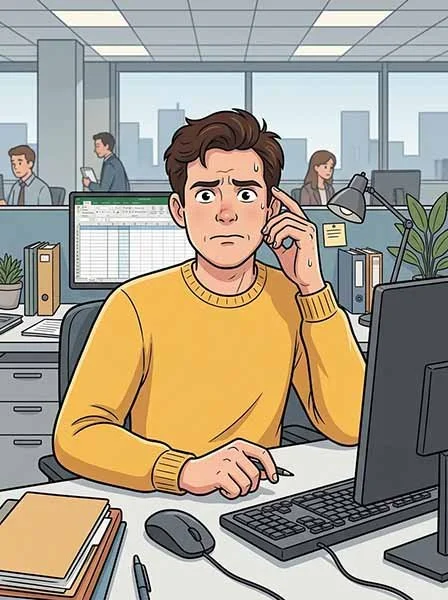
When anxiety shows up without warning, it's not random — it's your nervous system trying to tell you something. A therapist in Orange County can help you listen.
Nothing is wrong. You know this. You’ve done the inventory. Life is fine. Objectively fine. And yet here you are at 2am, heart doing its little tap dance, running through a list of hypothetical disasters that haven’t happened and probably won’t.
You’re not in danger. Your nervous system just didn’t get the memo.
This is one of the most Googled mental health questions right now — “why am I anxious for no reason” — and it makes sense that people are searching for it. Anxiety affects more than 42 million adults in the US. A lot of them can’t point to a cause. And most of them have been told, in some form or another, to calm down, think positive, or breathe through it.
How’s that been working?
Here’s a different way of looking at it — one that might actually help.
Anxiety Is Not Your Enemy
I know that’s a strange thing to say when anxiety is the thing keeping you up at night and making your chest tight for no apparent reason. But stay with me.
Anxiety is a signal. It’s your nervous system doing its job — flagging something that feels unsafe, trying to get your attention, trying to protect you. It’s not malfunctioning. It’s not attacking you. It’s not evidence that you’re broken.
It’s a messenger. An exhausting, relentless, occasionally maddening messenger — but a messenger nonetheless.
The problem isn’t that the signal is wrong. The problem is that it got stuck in the “on” position. And when you’ve been treating it like an enemy — fighting it, suppressing it, bargaining with it — it tends to get louder, not quieter.
The Pressure of Trying to Get It Right
Here’s what’s happening inside when you shut down: there’s a lot going on at once. You’re tracking what the other person is feeling. You’re evaluating your own response before it even forms. You’re trying to find the version of what you want to say that won’t land badly.
That’s a lot of processing for a moment that’s already charged. And the more pressure you feel to respond ‘correctly,’ the harder it becomes to respond at all. So you say nothing. Which feels safer. Which also feels terrible.
Over time, silence becomes the default — not because you want distance, but because staying engaged started to feel like a minefield.
What It Does to the Relationship Over Time
When anxiety shows up without an obvious trigger, the instinct is to assume your brain is just misfiring. A chemical glitch. Bad wiring. Something to be corrected or managed.
But “no reason” almost never means no cause. It usually means the cause isn’t visible from the surface. It’s deeper — in the body, in old patterns, in parts of your experience that haven’t been looked at yet.
Your anxiety knows something. It might not be able to articulate it clearly. It might be communicating in the only language it has — tightness, dread, hypervigilance, a vague but persistent sense that something isn’t right. But it’s not random noise. It’s pointing somewhere.
What an Overactivated Nervous System Actually Is
Your nervous system has one primary job: keep you safe. When it detects a threat — real or perceived — it activates your stress response. Heart rate goes up. Muscles tighten. Attention narrows. You’re ready to fight, flee, or freeze.
This is a genuinely brilliant system. It kept human beings alive for thousands of years and it deserves some credit.
The catch is that your nervous system doesn’t always distinguish between a physical threat and an emotional one. It responds to a difficult conversation the same way it responds to a lion — which is great if there’s actually a lion, and somewhat inconvenient if you’re just trying to get through a work email.
When you’ve been under sustained stress — or when something overwhelming happened earlier in your life — your system can get recalibrated to threat. It learns to stay ready. Always scanning. Always prepared.
Over time, that readiness becomes your baseline. You’re not anxious about something specific. You’re anxious because your nervous system has forgotten what it feels like not to be.
This isn’t a disorder. It’s an adaptation. A nervous system that learned to be vigilant because, at some point, vigilance made sense. It’s not working against you. It’s still trying to protect you — it just hasn’t gotten the update that things are different now.
Trauma and Stress Don’t Have to Be Dramatic to Count
You don’t have to have experienced something catastrophic for your nervous system to be running in overdrive. Chronic stress does the same thing, just more slowly. Years of overworking, people-pleasing, suppressing your own needs, keeping everything together — that accumulates.
And trauma doesn’t only mean a single overwhelming event. It can mean growing up in a home where things were unpredictable. Where love felt like it had conditions. Where you learned to read the room before you knew what reading the room meant. Where expressing what you actually felt led to conflict, rejection, or just a heavy silence that said more than words.
The body remembers these experiences even when the mind has moved on. That’s not a metaphor. The nervous system stores what the conscious mind can’t fully process. And it stays prepared — just in case that environment comes back.
The Hidden Loop: When You Can’t Say No
Here’s something that doesn’t get talked about enough: one of the most reliable ways to keep an overactivated nervous system activated is to keep saying yes when you mean no.
Notice what happens in your body in that moment. Someone asks something of you — your time, your energy, your agreement. There’s a flicker of resistance. Something in you knows the answer is no. And then you override it. You say yes. You manage their feelings. You keep the peace.
That override isn’t neutral. Every time you suppress what you actually feel to accommodate someone else, you send a signal to your nervous system: your needs are not safe to have. The threat is confirmed. Stay ready.
The cruel irony is that people who can’t say no are usually doing it to avoid discomfort. But the yes creates its own discomfort — resentment, exhaustion, a slow accumulation of self-betrayal that feeds the anxiety loop directly.
This isn’t a character flaw. It’s almost always an old protection strategy — a part of you that learned, early on, that keeping others comfortable was how you stayed safe. That part is still doing its job. It’s loyal. It’s well-intentioned. It just doesn’t know the situation has changed.
The anxiety isn’t your enemy here either. It’s the sound of that part working overtime.
Why Thinking Your Way Out Doesn’t Work
If you’ve ever tried to logic your way out of anxiety, you already know the outcome. You remind yourself there’s nothing to worry about. You make the list. You try to be rational. The anxiety listens politely and stays exactly where it is.
That’s because anxiety that lives in the nervous system isn’t a thinking problem. It’s a body problem. The part of your brain running the threat response doesn’t speak logic. It speaks sensation, pattern, and lived experience.
You can’t think your way to safety. You have to feel your way there.
Which means the path forward isn’t about managing the anxiety better. It’s about getting curious about what it’s trying to tell you.
What Actually Starts to Shift Things
When you stop treating anxiety as an intruder and start treating it as information, something changes. Not immediately. Not dramatically. But the relationship shifts.
What is this feeling pointing to? What did your nervous system learn that’s keeping it on high alert? What part of you has been working this hard, for this long, and maybe deserves to be heard rather than managed?
When you start to make contact with those answers — not just intellectually, but in your actual body — the nervous system begins to get the update it’s been waiting for. Not because you forced it. Because it finally felt safe enough to receive it.
That’s slow work. But it’s the kind of work that actually changes something — not just quiets it down for a while.
Working With a Therapist in Orange County
If you recognize yourself in any of this, you’re not broken and you’re not overreacting. Your nervous system adapted to something real. And now it needs help learning that the adaptation is no longer necessary.
That’s genuinely hard to do alone — not because you’re incapable, but because the nervous system regulates in relationship. It needs to experience safety with another person, not just be told about it.
Working with a therapist in Orange County who understands what’s happening beneath the anxiety — not just the symptoms, but the story the nervous system has been carrying — can make a real difference.
Taking the Next Step
You don’t need to have it all figured out before you reach out. A free 15-minute consultation is just a conversation — low pressure, no agenda, just a chance to see if it feels like a fit.
If you’re in Orange County — or anywhere in California — I’d be glad to connect. Your anxiety has been trying to get your attention for a while. Maybe it’s time to hear what it’s actually saying.
About the Author
Dr. Don Campbell is a licensed psychologist serving adults throughout Orange County. He works with individuals who feel overwhelmed, disconnected, or stuck — often navigating anxiety, depression, trauma, low motivation, disillusionment, and issues related to self-worth. Many of the people who seek him out are thoughtful and self-aware, even if they’re not always sure how to put into words what feels off or heavy.
Dr. Campbell’s approach to therapy is warm, collaborative, and grounded. He believes meaningful change begins with feeling understood and respected — not rushed or judged. Therapy with him is a space to slow down, make sense of what’s happening beneath the surface, and move toward greater clarity, steadiness, and self-trust at a pace that feels supportive.
If you’re considering working with a therapist in Orange County, you can learn more about his approach or schedule a free 15-minute consultation through his website.
